Annuity Shop and Compare - Golden Rule of Annuities
The Golden Rule of Annuities
Annuity 101: What are they? How to SAFELY invest your money as a senior! #financialfreedom - Watch on YouTube
We often joke, No...this doesn't mean the carriers have all the gold!
But...that's not too far as we'll explain below. This understanding makes shopping annuities so much easier which is critical.
There are dozens of carriers and 100's of actual annuities to choose from.
We make this free, transparent, and easy below but faced with so many choices can be overwhelming.
Until you know the rule!
It also helps to avoid being "sold" by agents pushing their own agenda with a few limited options.
To that effect, here's our credentials in doing the exact opposite:
This is what we'll cover:
- A quick intro in the Wild West of annuity options
- The Golden Rule of Annuities
- How to best shop and compare annuities
Let's get started!
A quick intro in the Wild West of annuity options
The jargon sure doesn't help.
- Types of annuities: SPIA's, MYGA's, RYLA's.
- Variations within annuity types: duration, payout schemes, riders, calculations of interest, indexes
It can be overwhelming.
The first step is honestly ask yourself the 3 questions before shopping annuities:
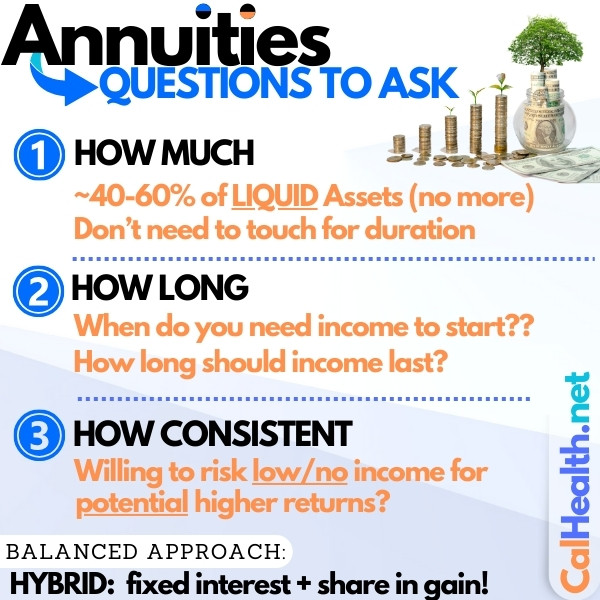
We go through this in our Simplified Explanation of Annuities or our MYGA and Indexed annuity comparison.
People will say..."We'll I want the most return with the least risk".
Ah...Goldilocks!
There are really two types of "true" annuities...MYGAs and Indexed annuities.
- MYGAs offer a fixed percentage interest for a defined time. Think CD on steroids with better taxation.
- Indexed annuities allow you to share gains with another market like stocks (S&P, Nasdaq, etc).
Both protect your principle (no loss of original funding) but offer different potential income.
MYGAs are safer but may offer a lower interest rate compared to indexed annuities...Over enough time! Think 3-5 years.
The basic thought is this...index annuities can perform better than MYGAs if the underlying index is positive over the duration you're holding them.
In today's world...to be conservative, think 5%ish versus 5-7% for Indexed. Again, depending on the duration and how the index performs.
Sure, they can go higher and brokers will show you back-tested, 10 year results but the last 10 years are definitely not normal (or reproducible) so be conservative.
In a down year, an indexed annuity will likely return zero!
There are hybrids out there that offer you the greater between a fixed interest rate or a share of an index (like the S&P). These are interesting in today's world as we'll discuss in another article.
Okay...that's a very brief lay of the land. We avoided RYLAs and Variable annuities because they're relatively expensive for the potential upside AND this might be a terrible time to roll those dice (peak stock market).
Now...let's turn our attention to the Golden Rule so we can strategize better.
The Golden Rule of Annuities
With really two main types of annuities, why is there so much confusion and technical jargon around annuities.
You never feel like you know enough to make the best decision!
Worst yet, should you be more aggressive assuming the market will rise or more conservative with Buffett having record amounts of his funds in cash (big correction coming)?
There are strategies to account for both options but the Golden Rule will help.
Let's look at it from the carrier's point of view.
They will offer the most net payment that THEY HAVE TO for market share!
Annuities are a commodity. The carriers have a huge army of statisticians and algorithms calculating their net margin on any and every given combination of options.
They're comparing this to what's on the market to see if they sneak out marketshare with some carrot on a new product.
- Bonuses
- Cap, participation, spreads, and other mechanisms to control outlays
- Durations, riders, and more
If a broker or carrier is pushing some shiny new object (upfront bonus for example), you can be assured they're reducing payments somewhere else.
For example, if a plan has a 100% bonus up front, they'll make up for it in the % paid over the life of the policy.
Once you understand this, you focus on what really matters since it really 6 or half a dozen with the various products.
The Golden Rule is that although there are variances (especially with Indexed annuities), annuities are a commodity.
If a rider offers extra income, expect that the cost of the rider will offset this over the the policy.
There are no "loss leaders" in an annuities basket. This is not the grocery store!
So...how do we take this information into account when shopping.
How to best shop and compare annuities
First, we believe people should have access to the full range of options available since everyone's situation is different.
Fast, free, and immediate without sales pitch here:

Whether it's accumulation (growing an asset) or income (providing consistent income now or in the future), you can see 100's of different options.
It's still confusing though. So many options even if we took it from 700 down to 100.
Sure, the system will rank them but focus on three key filters:
- Quality of the carrier - aim for A- or higher. The system will recommend this
- Guaranteed income - what's the contractual obligation of the plan.
- Worst case income - for indexed annuities, how does it perform in the worst case (you'll see in red to the right).
First of all, an annuity is only as good as the carrier and sure...they rarely go out of business but carriers can change all sorts of parameters at each anniversary if they underpriced an annuity to gain marketshare.
Next up...guaranteed income.
With MYGAs, this is really easy to compare. It's listed right there for a given duration!
For indexed annuities, not so easy.
In a down market year, the no-fee index annuities generally return zero interest. Some have a minimum amount and we'll look at a hybrid we're a fan of currently.
Past performance is definitely not indicative (or even likely) to the future period.
Have you seen where our market is right now??
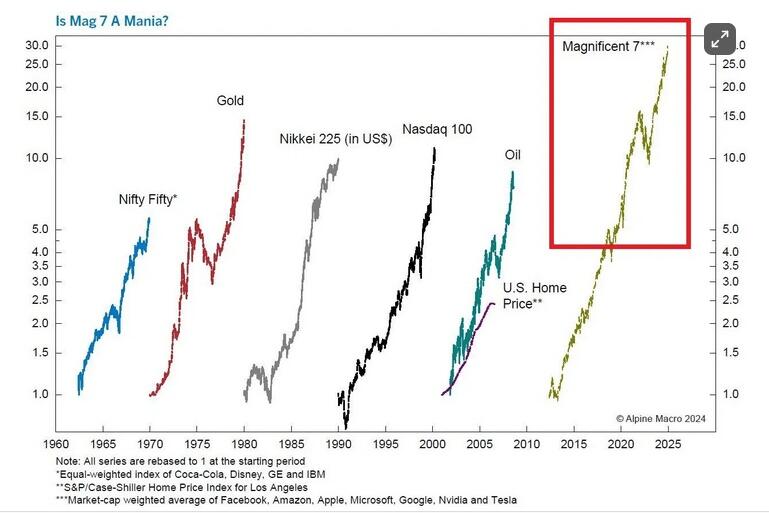
We'll turn our attention to strategies based on our current situation in a separate article but to be conservative, focus on the worst case performance to at least avoid all the crazy returns since covid.
In the end of the movie, Magnificent Seven, most of them died in a shoot out. Just sayin'!
The quote system above will automatically rank MYGAs by current interest payout, carrier strength, and flexibility.
It will also rank index annuities based on carrier strength, past performance average, and flexibility.
Again, we prefer the worst case instead of average.
To be very conservative, estimate 5-7% for indexed annuities over a long enough period.
There's a new plan that has a 4% guaranteed floor and a 55% of S&P share, whichever is higher.
That straddles the two major types and isn't a bad option in our current landscape with so much in flux.
There are also ways to Straddle and Layer different options to smooth out bad years but get some upside.
We're happy to help with any questions but just know that annuities are commodities from the carrier's perspective and if you're getting something extra, you're paying for it somewhere else!
That's the Golden Rule of Annuities!
You can quote 100's of options (that's the only way to shop annuities) here fast, free, and immediately:
Reach out to us with any questions as we're here to help. Be well!
We just answer questions all day and if we're helpful, hope you work with us since there's no cost for our assistance.
Call 800-320-6269
Email:
help@calhealth.net
Pick a
time to talk
here
Chat
online here